Tala Cauvery:
The place Tala Cauvery is about 45 kms from Madikere and about 10 kms from Bagamandala in Coorg District.
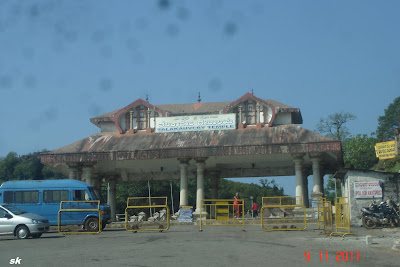
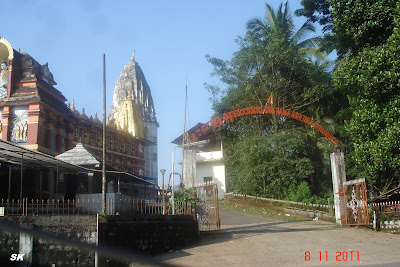
This is the starting point of River Cauvery at Brahmagiri hills. We see a welcoming arch as we reach Tala Cauvery.
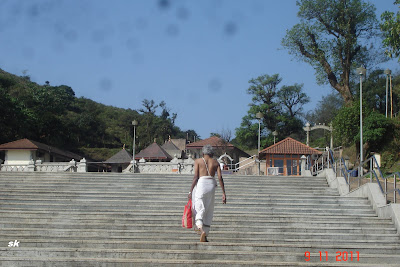
We climb steps to reach the original starting place of River Cauvery. There is a small tank known as Kundike which is the starting point of River Cauvery. There is a bigger tank attached to the small one were pilgrims take bath in the holy water of Cauvery. Here we find room for changing the dress.
None, other than the priest, is allowed to touch the holy water of Cauvery from the Kundike. After having bath in the tank they perform kumkum pooja for the piligrims who opt to do.
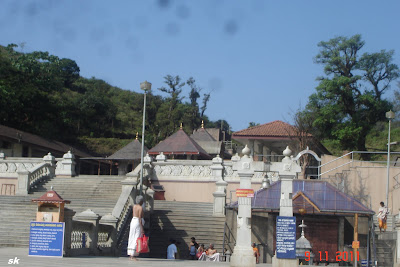
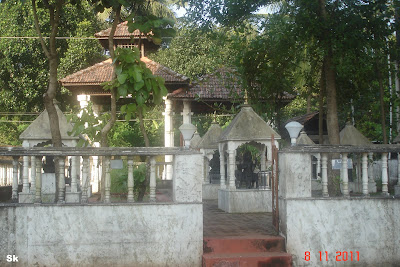
We find few more steps to climb and here we find sanctum for Ganesha, and Lord Siva. Here Lord Siva is known as Agastheeswarar. The Siva Lingam was worshiped by Agasthiya Muni. When he came to Bramagiri Hills, he made a Siva Lingam by mud, to worship. There is an Aswattha tree seen here and there is a small sanctum for Naga devar. Purana says Agasthiyar worshiped the Aswattha Tree, and was blessed with the darshan of Lord Vishnu, Lord Siva and Lord Brahma known as Tri moorthy.
Importance: On the first day of Tula month Cauvery sprouts out like a fountain and starts flowing. They have built the small tank where she emerges. Having bath during Tula Sankramana is considered auspicious. It was the day Cauvery started flowing as river from the Kamandala.
Purana says, once Lord Vishnu for the benefit of mankind he gave a girl to Lord Brahma. He did not reveal the secret. King Kaveran did not have child so he started penancing. Brahma was pleased by his worship and asked him reason for the penance. King asked for a daughter, and Brahma gave Lopamudra, to him. King went to Brahma Giri along with Lopamudra. She is also known as Cauveri, being the daughter of King Kaveran.
One day Agasthya muni on his way, came to Brahma Giri where he met Lopamudra and he wanted to marry the girl. Lopamudra was in confused state, at that moment Lord Vishnu answered “yes” through Lopamudra for Muni’s request with a condition that he should be with her always and should not leave her alone. Muni agreed to the condition and the marriage took place. They lived happily in Brahma Giri.
One day Muni had to leave for the other side of Brahma Giri to have bath, where River Kannika was flowing. He transformed Lopamudra to “water” and filled in his Kamandala and asked his students to take care of the Kamandala until he returns. Lopamudra was feeling uneasy in the Kamandala, and she came to know the secret of her birth.
Agyastiya munidid not keep to his words and gave up the condition to which he agreed. She thought this is the right time for her to leave. She throttled out of Kamandala and started flowing. Students of Muni tried to stop her, and she started flowing under ground as Antharvahini.
After her flow like this for sometime, Cauvery came up again at Naga teertha. Here Naga Devas requested her to go back to Agasthiyar. She told them she was created for the purpose of benefit to “Mankind” to flow as River. She said, Agasthiyar knew the cause of my birth and he only transformed her into water from human being. Naga Devas were convinced with her, and allowed her to flow. Cauvery joins with River Kannika and River Sujyothi which is Antharvahini.
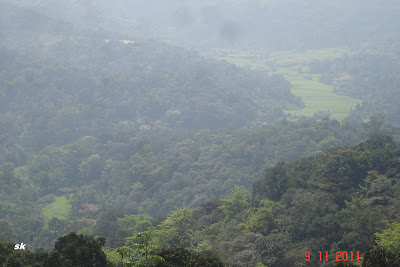
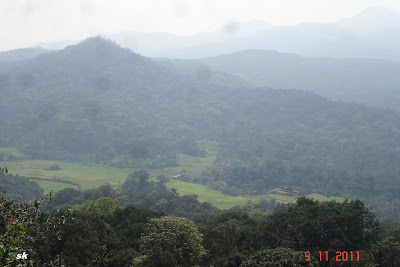
View point from Tala Cauveri
Our next place of visit was to Bagamandala, which is about 40 Kms from Madikere.
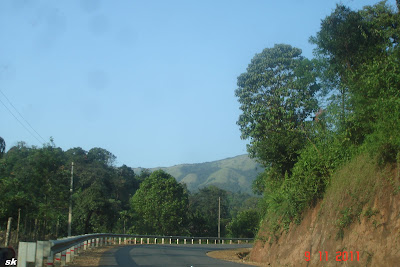
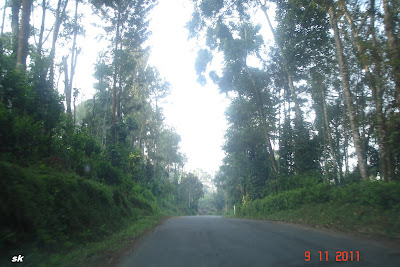
The place Bagamandala is situated at the confluence of two Rivers, Cauvery, and Kannika.
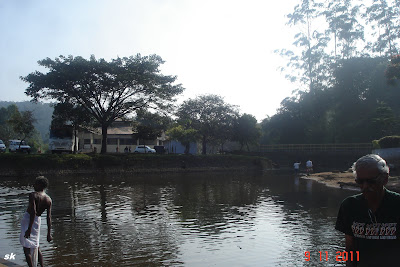
Here another River Sujyothi flow as antharvahini, and join the two Rivers.
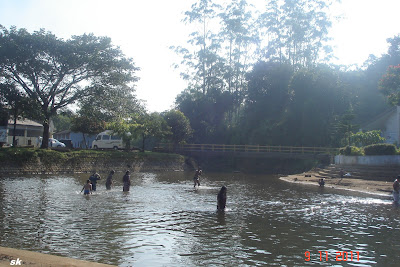
Hence the place is considered as Triveni Sangamam. The place is considered auspicious to have a dip and perform rituals for their ancestors.
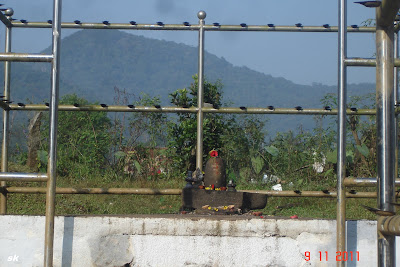
There is a small Siva Lingam seen here.
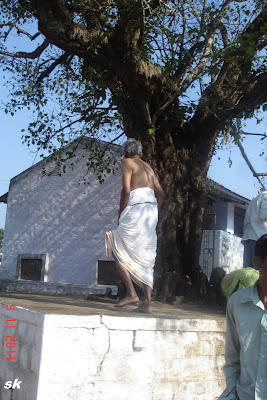
There is a Peepul tree, here and we see lot of Nagar installed.
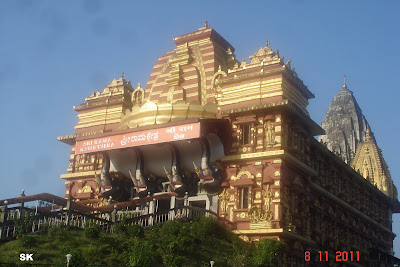
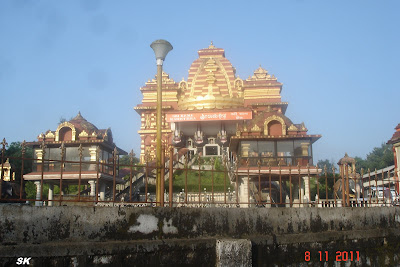
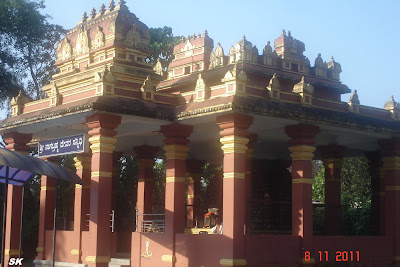
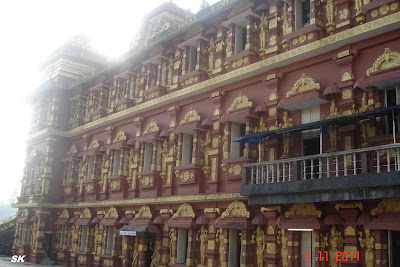
There is a Siva temple here, in Bagamandala near the sangamam. Lord Siva is known as Sri Bhagandeshwara. The temple was established by a Rishi known as Bagamandala.
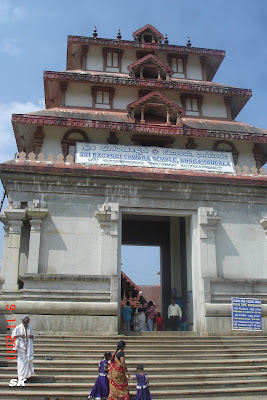
We have to climb few steps to reach the main entrance of the Temple. There is a Raja Gopuram of three tiers for the temple. The temple is constructed in Kerala style.
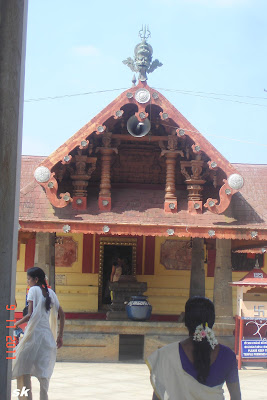
Main deity is Lord Siva in Lingam form known as Bhagandeshwara. There are separate sanctums for Ganapathy, Ambaal, Mahavishnu and Subramanya. Here Subramanya Swamy is Swayambu Moorthy. In front of Lord Subramanya there is a mandapam with wodden carvings relating story of Subramanya
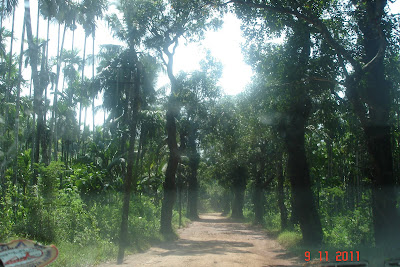
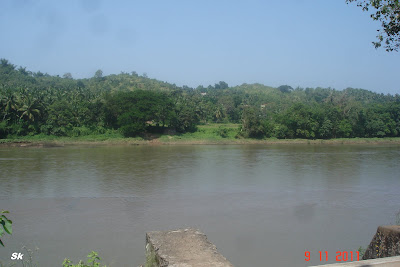

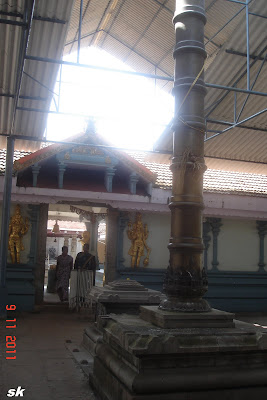
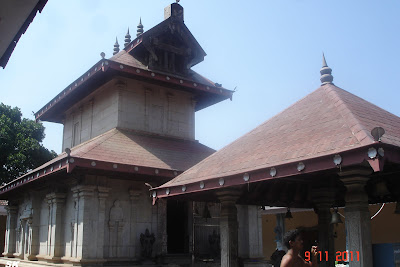
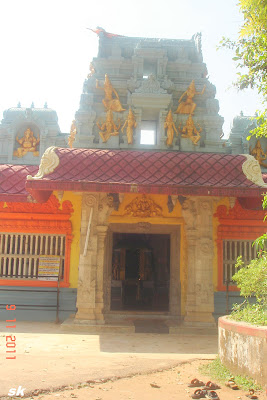
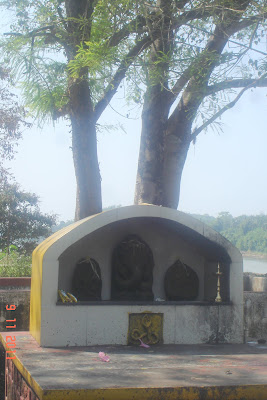
The temple is very old temple with history of about 2500 years. The original Lingam is coverd by sand of River Netravthy which is towards left of sahasralingeswara Swamy temple. During the annual festival, they rempve the sand covered on original Siva Lingam, and build a temparory structure to celebrate. Removing the complete mud is impossible. Every year during rainy season the mud covers the Siva Lingam again. The present structure of the temple that we see dates back to 13th century.
Befriend on Facebook

Contributors

My Other blogs


Copyright

Ancient Temples of India by http://ancientindiantemple.blogspot.com/ is licensed under a Creative Commons Attribution-Noncommercial-No Derivative Works 2.5 India License.
LinkWithin

Subscribe to my posts


 Posts
All Comments
Posts
All Comments